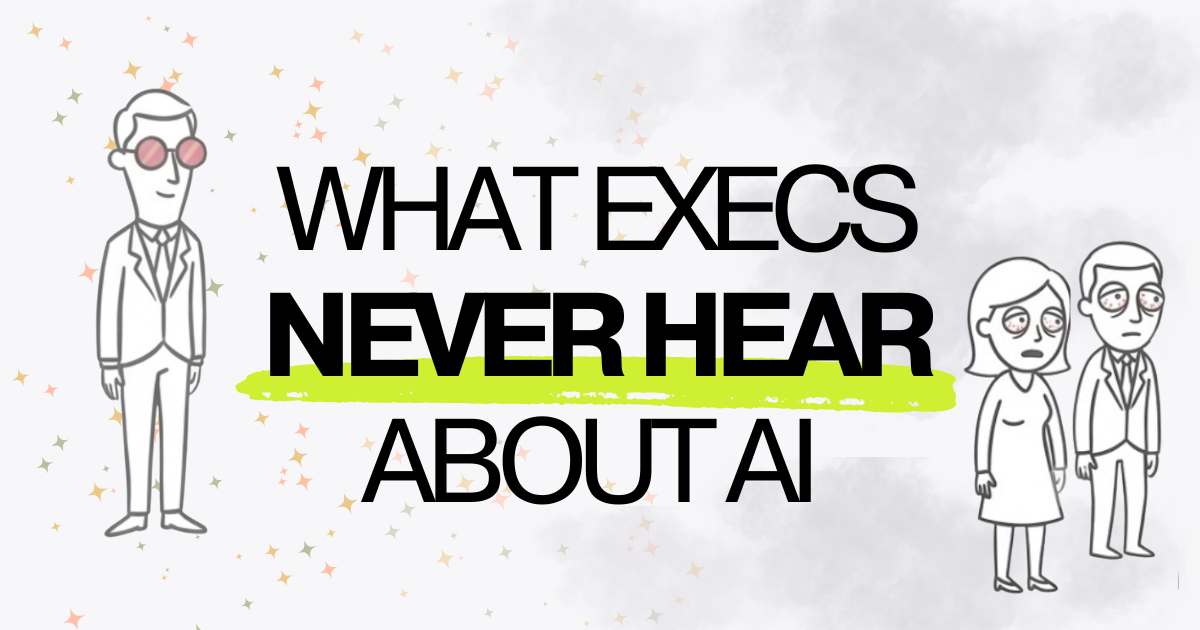
When leadership asks how AI is going, of course you put your best foot forward.
But under those rosy updates, most people I talk to are saying something else:
"AI is overhyped. I'm faster on my own."
"I was told this would help. I can't figure out how."
"I know there's more, but I don't have time." The difference in perception shows up in numbers too.
A survey asked execs and individual contributors the same questions about their experience with AI.
The two groups had very different answers: |
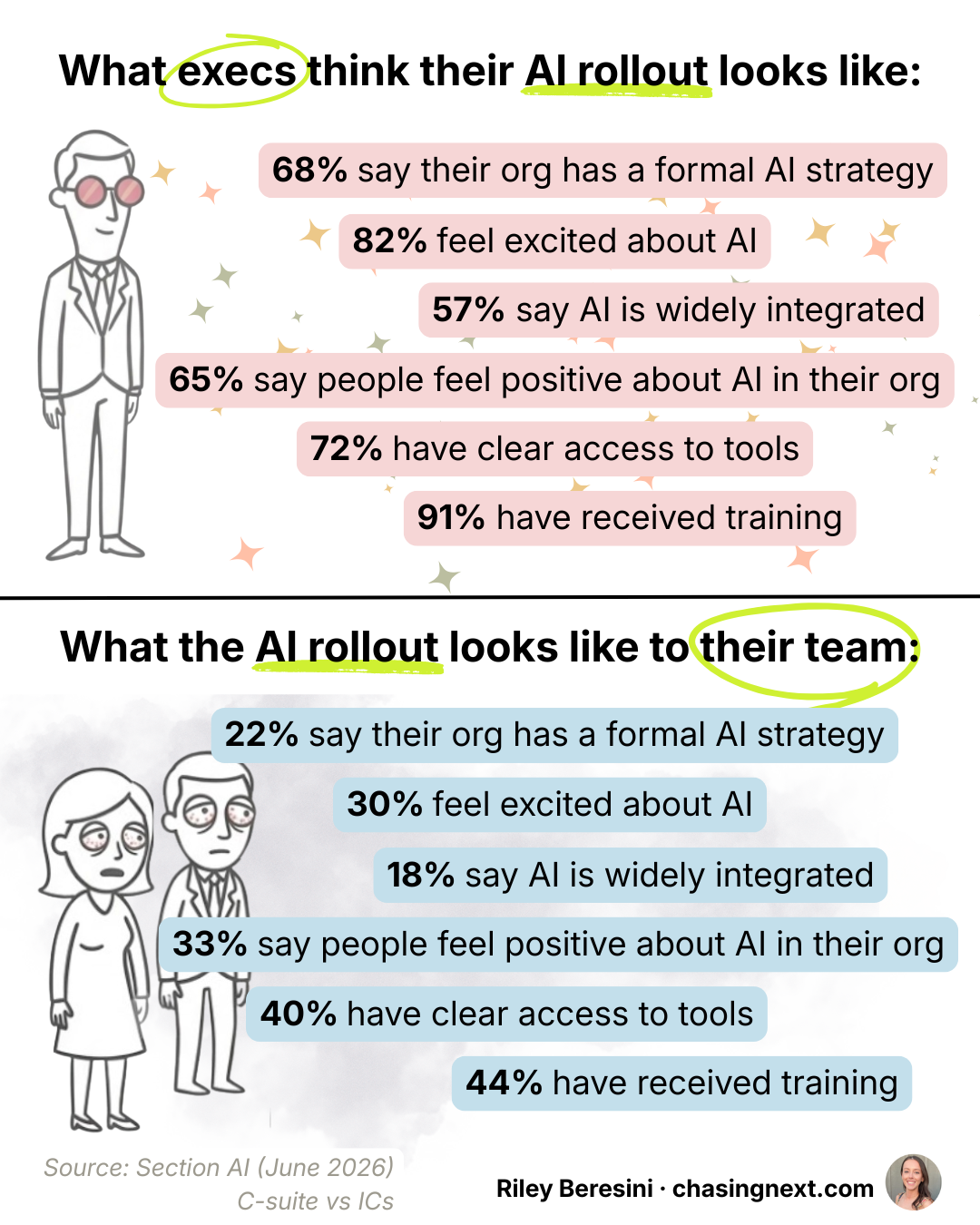 Section's AI Proficiency Report |
What people tell me fills in the gap.
|
Training is too basic, if there is any.
|
One team's training included a song about prompting.
Others tell me it's way too elementary for where they are or it doesn't have anything to do with their work. |
AI got pulled into the usual politics.
|
Some teams picked AI leads or created task forces, while everyone else is left waiting for access, permission, or rules on how to use it.
People build dashboards or show off something cool they made, only to be told they're not allowed to.
Red tape and rigid roles leave them feeling like they're not meant to contribute. |
What works doesn't spread.
|
Between the politics and fear, what works is being hidden instead of celebrated.
Prompts and setups getting great results stay with one person.
There's no room for the culture of sharing and experimenting that smaller companies and solo AI users already have.
So AI becomes something people work against instead of with. |
If this doesn't make it into your updates, leadership can't help.
|
Sound familiar? There’s no shame in it. It’s where things are right now.
If you're a manager, you have more influence than you might think.
The same report found that when managers expect and require AI use, their team members score 1.5x higher on AI proficiency and are 2.7x more likely to be excited about it.
So keep sharing your wins.
But also make it known where the foundation is failing, so leadership can address it. |
A few things that make a difference.
|
→ Training that gets everyone building.
|
Skip the songs and generic sessions.
Ask for role-based training that focuses on getting the team into your tools, building stuff unique and helpful to their jobs. |
→ AI strategy led by many, not few.
|
When only a corner of the team can contribute, it breeds fear and a poor culture around AI.
It also caps what your team, and your company, can become.
Keep the AI leads and task forces, but make sure everyone has a way to take part, so ideas can surface from anywhere. |
→ A place to share what's working.
|
The teams I see doing this well have a Slack or Teams channel for it.
It's not mandatory, but people post the creative ways AI helps them do their jobs, the wins get celebrated, and more people want to hop on board.
Better than forced share-outs. |
|
|
Curious where your team stands? Take the scorecard to see where your foundation is strong and where it needs work. It only takes a few minutes. - Riley |